How stories are written, discovered, purchased, and developed into entertainment IP.
Digital fiction is becoming a global entertainment business across webnovels, audio storytelling and microdramas. In Indonesia, KaryaKarsa's direct-to-fan model provides a view into what writers publish and what readers choose to pay for. This report explores the signals that matter for writers, publishers and future adaptations.
KaryaKarsa is a story kitchen for the story economy
Users: 4M+
Creators: 350K+
Stories: 100K+
Monthly transactions: 500K+

What Is Digital Fiction?
The digital fiction market, driven by approximately 324 apps, is estimated to generate US$34-40 billion in annual revenue.
What stories are made and sold?
While sales data shows what most of us know to be true - romance and drama are genres with overwhelming purchase interest in Indonesia, consistently over time - this does not dictate what creators want to create and the variety of content on KaryaKarsa remains very diverse. But to put things in perspective, all stories in the Titles Per Genre Purchased chart are paid stories; we did not include data on free content. Purchase interest is consistent, proven and sustained on KaryaKarsa - showing that IP monetisation happens even at the smallest transaction.
If you remove Romance and Drama, Fantasy is the genre with the most consumer interest, followed by Horror.
What makes a story commerciallty interesting?
Besides genres and tropes, our data consistently shows reader loyalty to authors - the more they like one title, the higher chance they will support another.
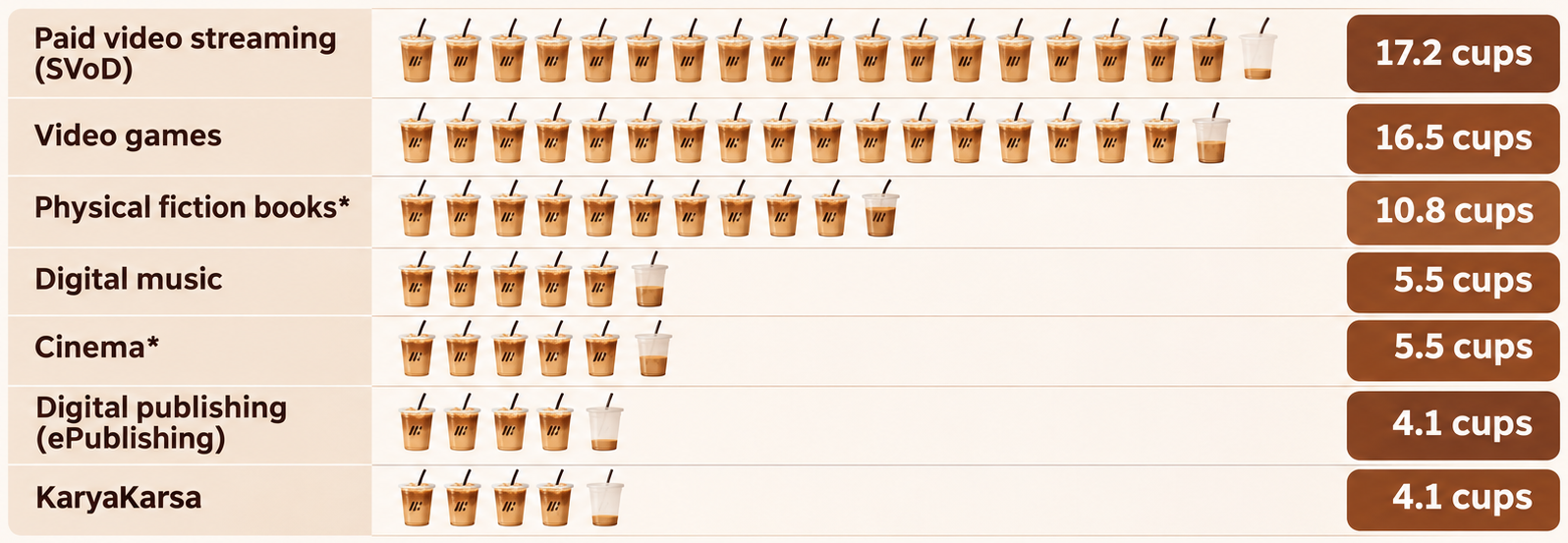
But how much do people actually spend on entertainment?
How do stories reach consumers?
High internet coverage means more opportunities for stories to reach and monetise audiences. While the existing footprint might be similar, internet access helps builds future audiences faster.
From serialised webnovel to the next IP franchise
KaryaKarsa is a lab and testing ground for story IP - that's how our authors use it. A story with good sales traction and engagement gets new chapters, and continued paying audiences encourages the creator to continue creating and monetising IP at the earliest scale.
Our KaryaKarsa Originals initiative takes the data and experience and distills it into IP properties ready-made both for monetisastion on KaryaKarsa itself, and further adaptation into other formats.
Here are a few things we can do for you:
- Identify stories and writers which have been commercialised with a loyal audience; derisking investment into adaptation projects
- Select from a library of more than 100,000 stories and a variety of genres, complete with engagement and sales data
- License stories in bulk for library building projects like microdrama offerings
- Engage with multiple potential stories and writers through our IP Management offering, simplifying and decreasing friction in licensing and optioning stories
- Create new stories and IP with our Writer's Room team to build an IP from the ground up
- Explore brand and IP partnerships for your content and GEO needs
Have a question for us?
Drop a message for us here!
Copyright © 2026 KaryaKarsa. All rights reserved.